
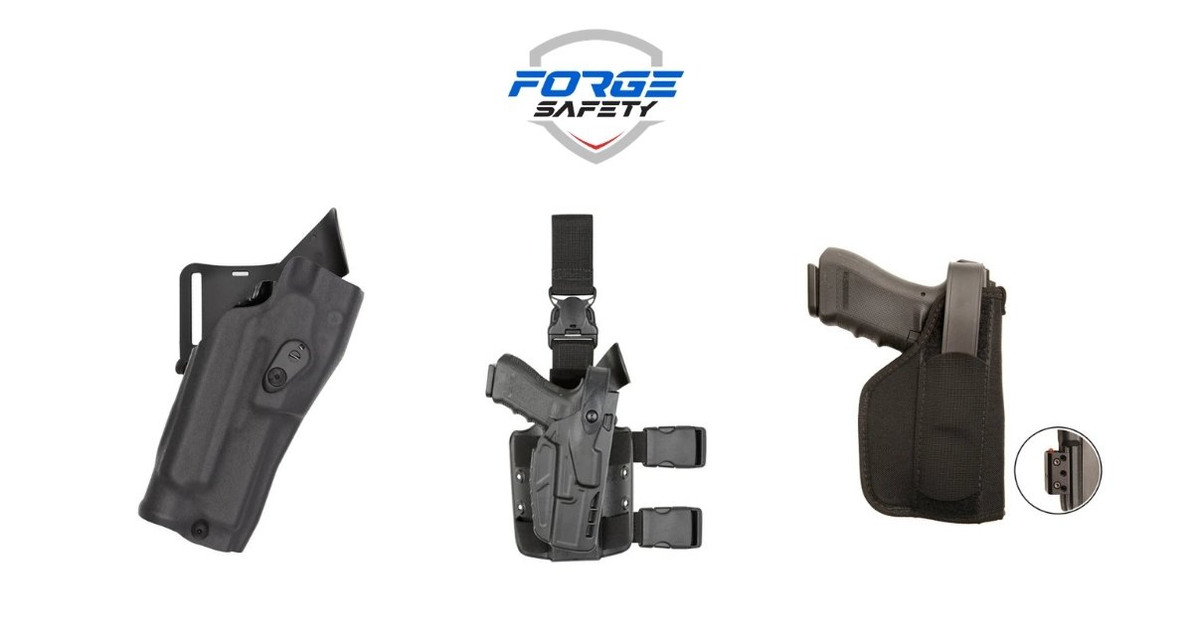
How to Choose the Right Holster for Duty or Everyday Carry
If you’re a security professional, your sidearm is only as reliable as the holster it rides in. A poorly chosen rig can slow your draw, increase the risk of snagging, or even let your weapon shift out of reach at the worst possible moment. Yet with so many kydex, leather, and hybrid designs flooding the market, knowing how to choose the right holster can feel overwhelming.
This guide cuts through the marketing noise and gives you a clear, practical framework for selecting a duty holster or everyday carry holster that fits your body, gear, and mission profile. Whether you’re standing patrol, securing a venue, or simply carrying off‑duty for self‑defense, the right holster will keep your weapon safe, accessible, and out of the way until you need it.
Understand Your Carry Role First
Before you browse products or read reviews, you need to define your primary role and carry environment. The same holster rarely works equally well for a uniformed security officer, a plain‑clothes contract guard, and a private citizen carrying concealed.
Ask yourself:
- Will you be open‑carrying on duty with a visible belt package?
- Are you limited to concealed carry in a uniform or civilian clothing?
- Do you work indoors (airports, malls, offices) or outdoors (perimeter security, events)?
- Are you constantly bending, sitting in vehicles, or moving through tight spaces?
These answers shift your priorities. A duty holster guide geared toward uniformed security will emphasize retention, durability, and compatibility with a tactical belt and duty gear. In contrast, everyday carry holsters lean toward slim profiles, comfort, and low print, even if that means slightly less overt retention. Aligning your holster choice with your actual daily routine is the first step in learning how to choose the right holster for your job.
Know the Core Types of Holsters
Different holster types serve different roles. Matching the type to your use case is just as important as the material or brand.
Inside the Waistband (IWB)
IWB holsters tuck inside your pants, typically riding along the belt line near the hip or appendix. They excel at concealment, making them ideal for low‑visibility security roles or everyday carry.
Pros:
- Minimal printing under shirts and jackets
- Close to the body, which can speed up the draw with practice
- Comfortable under loose clothing
Cons:
- Can be harder to clear from a tucked‑in shirt
- May shift when sitting or driving, especially with softer designs
- Less retention capacity than some duty OWB rigs
Best for: Plain‑clothes guards, undercover environments, and anyone who needs to appear non‑threatening while still carrying a sidearm.
Outside the Waistband (OWB)
OWB holsters mount over the belt, sitting outside the waistband. This is the classic duty holster setup for uniformed security and patrol roles.
Pros:
- Easy access and consistent draw stroke
- High retention options (Level II, III, etc.)
- Comfortable with a proper duty belt and battle belt setup
Cons:
- More visible; may not be suitable for undercover or low‑profile assignments
- Can print under light jackets or untucked shirts
Best for: Security officers who wear a visible belt and duty gear, especially in roles that require frequent firearm checks or fast access.
Appendix Carry (AIWB)
Appendix inside the waistband (AIWB) holsters sit near the front of the waist, usually just off the centerline. They’re popular in both duty and everyday carry circles because of speed and concealment.
Pros:
- Very fast draw from the support side
- Highly concealable under short‑waisted shirts
- Keeps the gun in front of your body, reducing the chance of being disarmed from the rear
Cons:
- Requires strict trigger discipline and proper cant
- Can be uncomfortable if the holster isn’t cut precisely to your body
Best for: Security personnel who prioritize speed and need to carry concealed in a low‑visibility uniform or business‑casual attire.
Shoulder Holsters and Other Options
Shoulder rigs and ankle holsters are less common in modern security work but still have niche uses. Shoulder holsters suspend the firearm under a vest or jacket, while ankle rigs keep weapons low and out of the way.
Use cases:
- Shoulder holsters: Covert security roles where a belt‑mounted gun would be obvious
- Ankle holsters: Backup guns or very low‑profile roles, but not ideal as primary duty rigs
These options are usually reserved for specific SOPs or secondary backup pieces, not standard duty carry.
Retention Level: How Secure Is Secure Enough?
One of the most critical aspects of how to choose the right holster for duty is understanding retention level. Retention refers to how many mechanisms must be released before you can draw your firearm.
Common retention classes:
- Level I: Friction hold only. No active retention.
- Level II: Friction plus one active retention (thumb break, hood, or similar).
- Level III: Friction plus two active retention mechanisms.
- Level IV: Three or more active retention layers (rare and often over‑engineered).
Security roles that involve physical contact (crowd control, escort, conflict de‑escalation) generally require Level II or Level III holsters. These prevent an attacker from easily grabbing your weapon from your belt while still allowing a trained, repeatable draw. For everyday carry, many professionals choose Level II or even a well‑engineered friction‑only IWB for comfort, as long as they’re aware of and control their concealment and access points.
Pro tip: Always match your retention level to your agency policy and threat environment. Over‑engineering a holster can slow your draw; under‑engineering it can get you disarmed.
Material and Fit: Kydex, Leather, or Hybrid?
The material of your holster affects durability, trigger protection, and comfort. Here’s how the main options stack up:
Kydex Holsters
Kydex is a rigid polymer that’s molded precisely to your firearm. It’s the dominant material in modern duty holsters and competitive concealed‑carry rigs.
Pros:
- Excellent trigger protection with a molded guard
- Consistent fit; no break‑in period
- Easy to clean and resistant to moisture
Cons:
- Can feel stiffer and less comfortable on the body, especially in IWB carry
- May produce more noise when drawing if not properly fitted
Best for: Security officers who need a predictable, durable, and low‑maintenance holster that survives long shifts and harsh conditions.
Leather Holsters
Leather has been a staple in duty and traditional carry for decades. Modern leather holsters often use lined shells and reinforced trigger guards.
Pros:
- Extremely comfortable against the body
- Classic look that matches traditional uniforms
- Tends to mold slightly to your body over time
Cons:
- Requires break‑in and may loosen over years of use
- Less consistent retention than molded polymer
- Can be affected by moisture and temperature
Best for: Security teams with formal dress codes, ceremonial roles, or anyone who prefers a more traditional aesthetic.
Hybrid Holsters
Hybrid designs combine a hard shell (usually kydex) with a soft backing (often leather or neoprene).
Pros:
- Comfort of soft backing with the trigger protection of a rigid shell
- Good for IWB carry where you want both comfort and security
- Often more breathable than full‑khordekex
Cons:
- May not be as rugged as full kydex for high‑impact duty use
- Cleaning and maintenance can be more involved
Best for: Professionals who want the best of both worlds—comfort for long shifts and solid retention for security work.
Position, Cant, and Ride Height
Even if you pick the right material and retention level, the carry position, cant, and ride height will determine how fast and comfortable your draw feels in real life.
Carry Positions
Most holsters fall into one of these positions:
- Strong‑side hip (3 o’clock): Balanced, easy to draw, and widely used in both duty and concealed carry.
- Appendix (1–2 o’clock): Faster draw, better coverage when seated, but requires attention to trigger safety.
- Small of the back (SOB): Compact and concealable, but often restricted or discouraged due to safety and accessibility concerns.
For security roles, strong‑side hip and appendix are the most practical and widely recommended positions.
Cant and Ride Height
Cant refers to the angle of the holster relative to your body. A neutral cant (0°) keeps the grip vertical, while a forward cant tilts the grip toward your support hand. A rearward cant does the opposite.
Ride height is how high the holster sits on your belt.
- High ride: Faster access, but more visible and may print under lighter clothing.
- Mid ride: Balanced access and concealment.
- Low ride: Harder to print, but can slow the draw and dig into your body when sitting.
For duty holsters, mid‑ to high‑ride is common because it keeps the gun accessible while you’re moving or standing. For everyday carry, many officers prefer mid‑ride IWB or AIWB holsters to balance concealment and comfort.
Compatibility with Your Firearm and Accessories
A holster that only sort of “fits” your gun is worse than useless. How to choose the right holster must include a hard check for exact compatibility.
Ensure your holster:
- Is designed for your exact make and model (e.g., Glock 17, SIG P320, etc.).
- Matches any rail, light, or slide configuration you carry.
- Properly clears red‑dot sights or optics if you use them.
Universal holsters are tempting, but they often sacrifice retention, trigger protection, and consistency. In a security role, that inconsistency can cost you seconds when you need to present your weapon.
Comfort and Daily Wear Factors
You may only need your sidearm once in a blue moon, but you’ll be wearing the holster for eight, ten, or twelve hours a day. That means comfort, weight distribution, and stability matter just as much as retention.
Consider:
- Belt compatibility: Will the holster work with your duty belt or tactical belt?
- Weight distribution: Does it tilt or shift when you sit or drive?
- Breathability: Does it trap sweat or rub against your skin?
For duty holsters, a sturdy battle belt or tactical belt with good support is essential. For everyday carry, a well‑designed IWB or hybrid holster with a slim profile will let you move freely without constant adjustment.
Legal and Policy Requirements
In many jurisdictions, security personnel must follow strict firearm carriage policies, including holster type, retention level, and carry position. Before deciding on a holster, review:
- Your agency or employer’s SOP
- Local open‑carry vs. concealed‑carry laws
- Any client‑specific requirements on venues or facilities
Choosing a holster that violates policy or local law can put your job, license, and liability at risk. When in doubt, err on the side of more retention and clear compliance.
Where to Buy a Reliable Duty or Everyday Carry Holster
Now that you understand how to choose the right holster, the next step is finding a trusted source that tailors to security professionals.
Forge Safety & Personnel offers a range of duty holsters and everyday carry holsters designed for the realities of security work. Their lineup supports different positions, materials, and retention levels, so you can match your holster directly to your uniform, belt setup, and operational environment.
When shopping, look for:
- Firearm‑specific holsters
- Clear retention‑level labeling
- Adjustable cant and ride height
- Customer reviews from other security professionals
Choosing the right holster isn’t about chasing the trendiest brand or the flashiest design. It’s about aligning function, retention, and comfort with your actual role on the job. Whether you’re on a busy mall patrol, stationary venue security, or carrying off‑duty for personal protection, a well‑chosen holster will give you consistent access, reliable trigger protection, and the confidence to focus on what really matters—your environment and your safety.
Recent Posts
-
The Expandable Baton: Your Complete Guide to the Ultimate Tactical Tool for Duty
When law enforcement officers, security professionals, and responsible civilians need a reliable, po …May 27th 2026 -

Handcuff Keys & Accessories: Types, Compatibility, and Duty Essentials
If you work in law enforcement, security, or even find yourself in a situation where understanding r …May 26th 2026 -
Body Armor Levels Explained: NIJ Ratings, Plates, Carriers, and Riot Gear
Body armor can seem confusing at first, especially when you start seeing terms like NIJ ratings, sof …May 26th 2026