
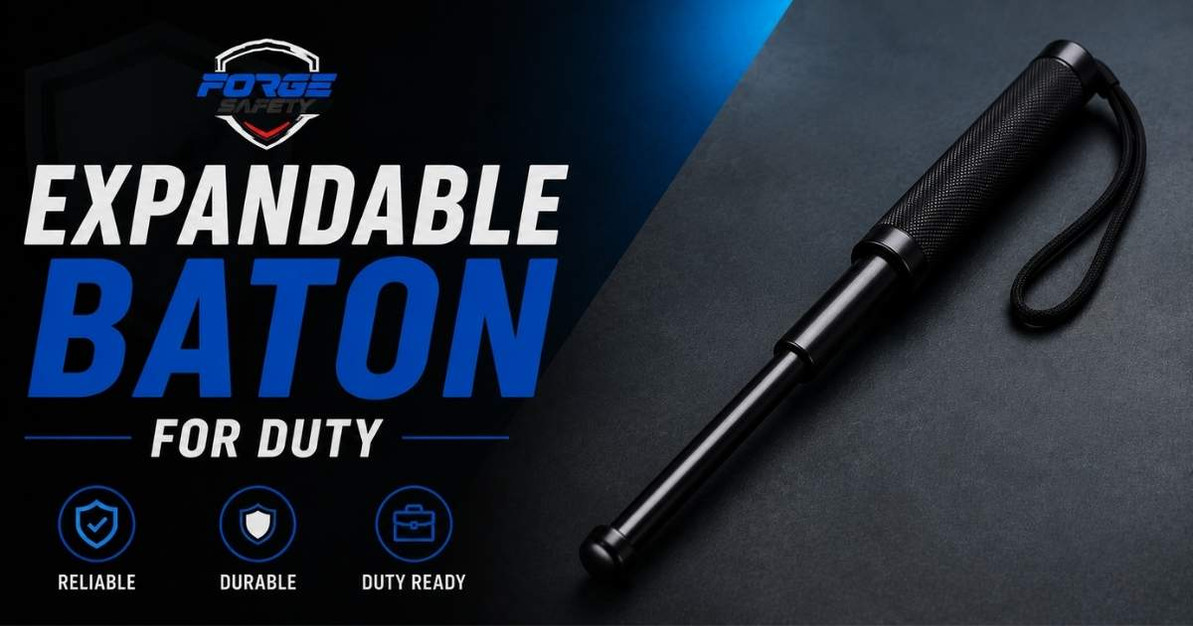
The Expandable Baton: Your Complete Guide to the Ultimate Tactical Tool for Duty
When law enforcement officers, security professionals, and responsible civilians need a reliable, portable force option, the expandable baton for duty stands out as one of the most practical tools available. This versatile weapon combines compact portability with effective stopping power, making it an irreplaceable asset in modern less-lethal arsenals.
Whether you're a police officer, security guard, private citizen interested in self-defense, or simply curious about tactical equipment, understanding expandable batons is essential. Let's dive deep into everything you need to know about this essential tool.
What Is an Expandable Baton?
An expandable baton (also called a telescopic baton, collapsible baton, or pritchet baton) is a portable striking weapon that collapses into a compact form for easy carry and rapidly extends to full length when needed. Most modern expandable batons use either friction-lock or centrifugal deployment mechanisms to lock into place during use.
The key advantage? When collapsed, a 21-inch baton shrinks to roughly 10 inches, fitting comfortably in a belt pouch, car glove compartment, or even a large pocket.
How Expandable Batons Work
There are two primary deployment mechanisms:
- Friction-Lock Batons: These use tension between nested steel tubes to maintain extension. You manually pull the baton to extend it and twist to collapse. They're quieter and allow controlled extension.
- Centrifugal (Inspection) Batons: These deploy instantly with a flick of the wrist using centrifugal force. The locking mechanism engages automatically when fully extended—ideal for rapid deployment in high-stress situations.
Both types typically feature hardened steel construction, ergonomic grips, and secure locking mechanisms designed to withstand repeated impact.
Why the Expandable Baton Remains Irreplaceable for Duty
Despite advances in less-lethal technology, the expandable baton continues to be a staple in law enforcement arsenals worldwide. Here's why:
Portability Meets Effectiveness
Unlike fixed batons that require dedicated carrying space, expandable batons collapse to nearly half their extended length. This makes them ideal for:
- Routine patrol where officers need hands-free carry
- Undercover operations requiring concealment
- Vehicle storage without taking up valuable space
- Multi-shift professionals who need reliable gear they can carry anywhere
Perfect Balance of Force Options
The expandable baton for duty fills a critical gap in the force continuum:
|
Force Level |
Tool Option |
|
Low-level pain compliance |
Expandable baton (warning/display) |
|
Moderate force |
Baton strikes to large muscle groups |
|
High-level compliance |
Targeted strikes to pressure points |
|
Lethal force |
Firearms |
This versatility makes it one of the most effective law enforcement less lethal tools available.
Proven Track Record
Expandable batons have been used by law enforcement agencies for over 50 years, with millions of units deployed globally. Their reliability in real-world scenarios is well-documented, making them a trusted choice for officers who depend on their equipment daily.
Fixed Baton vs Expandable Baton: Which Is Right for You?
One of the most common questions about tactical batons is whether to choose a fixed baton vs expandable baton. Here's a detailed comparison:
Fixed Baton Advantages
|
Feature |
Benefit |
|
Simpler construction |
Fewer moving parts = less mechanical failure |
|
Instant ready state |
No deployment needed—grab and use |
|
Maximum durability |
Solid construction withstands abuse |
|
Lower cost |
Typically $20–$50 vs. $50–$150+ for expandable |
Expandable Baton Advantages
|
Feature |
Benefit |
|
Portability |
Collapses to 50% length for easy carry |
|
Concealability |
Can be hidden more easily |
|
Reach versatility |
Multiple lengths available (16", 18", 21", 26") |
|
Comfortable carry |
Less obtrusive during long shifts |
|
Quick deployment |
Centrifugal models deploy in under 1 second |
The Bottom Line
For duty use where portability and all-day comfort matter, the expandable baton for duty is overwhelmingly the preferred choice among law enforcement professionals. Fixed batons make sense for security personnel stationed at one location or those who prioritize maximum durability over portability.
The Best Tactical Batons on the Market Today
When selecting a tactical baton, quality matters. Not all expandable batons are created equal. Here are key factors to consider when choosing the best tactical batons:
Top Features to Look For
- Material Quality: Look for hardened steel (not aluminum or cheap alloys)
- Locking Mechanism: Test the lock—it should feel solid with no wobble
- Grip Texture: Ergonomic, non-slip grip is essential for wet conditions
- Carry System: Quality belt pouch with quick-release mechanism
- Brand Reputation: Stick with established manufacturers like ASP, Monadnock, or PR-24
Recommended Lengths by Use Case
- 16-inch: Maximum concealability, ideal for undercover work
- 18-inch: Balanced option for general duty
- 21-inch: Most popular for law enforcement—best reach/portability balance
- 26-inch: Maximum reach for crowd control or specialized applications
Leading Brands Worth Considering
|
Brand |
Known For |
Price Range |
|
ASP (Armament Systems & Procedures) |
Industry gold standard, friction-lock technology |
$80–$150 |
|
Monadnock (Autolock Series) |
Reliable centrifugal deployment |
$70–$130 |
|
Sam Cheng (SC Series) |
Budget-friendly quality |
$40–$80 |
|
BlackHawk |
Tactical focus, durable construction |
$60–$100 |
For professional duty use, ASP and Monadnock are the most widely adopted by police agencies worldwide.
Legal Considerations: Are Expandable Batons Legal to Carry?
Before purchasing or carrying an expandable baton, you must understand your local laws. Regulations vary significantly by jurisdiction:
United States State-by-State Variations
Expandable batons are legal for civilian carry in most U.S. states, but several have restrictions:
- California: Generally illegal for civilians to carry concealed; some exceptions for security professionals
- New York: Restricted—requires special permit in some jurisdictions
- Massachusetts: Strictly regulated—basically illegal for civilians
- Illinois: Chicago specifically bans them; state law varies
- Michigan: Legal for self-defense with training requirements
Key Legal Questions to Ask
- Is it legal in my state and city?
- Do I need special licensing or certification?
- Am I allowed to carry it concealed or only openly?
- Are there age restrictions (usually 18+)?
- Does my employment (security guard, private investigator) affect legality?
Always consult local law enforcement or legal counsel before purchasing. What's legal in one state may be a felony in another.
Proper Training: Why Technique Matters More Than Equipment
Owning an expandable baton is meaningless without proper training. Law enforcement agencies require extensive baton training before officers can carry one on duty—and for good reason.
Essential Training Components
- Deployment Drills: Practice smooth, rapid extension until it becomes muscle memory
- Target Selection: Learn which body targets are effective vs. dangerous
- Strike Techniques: Master proper form for maximum impact with minimal effort
- Retention Skills: Prevent criminals from grabbing your baton
- Legal Justification: Understand when baton use is legally justified
Recommended Target Areas
Safe Targets (large muscle groups):
- Thighs
- Calves
- Shoulders
- Forearms
Dangerous Targets (avoid unless life-threatening):
- Head/skull
- Neck
- Spine
- Kidneys
- Groin
Proper training reduces liability, increases effectiveness, and ensures you can defend yourself while minimizing unnecessary harm.
Expandable Batons for Self-Defense: What Civilians Need to Know
While law enforcement dominates expandable baton use, many civilians find them valuable for personal protection. Here's what you should know:
Advantages for Civilian Self-Defense
- Non-lethal force option: Less likely to result in deadly consequences
- Distance creation: Keeps attackers at arm's reach
- Verbal warning tool: Displaying a baton can deter aggression
- Compact carry: Easy to keep in car, bag, or home
- Psychological advantage: Attackers often flee when confronted with a weapon
Important Caveats
- Training is essential: An untrained baton user is more dangerous to themselves
- Legal liability: You can still be sued or charged if use is deemed excessive
- Not a substitute for awareness: Situational awareness prevents most attacks
- Practice regularly: Skills degrade without repetition
For civilians interested in self-defense batons, start with training classes, verify local laws, and choose a reputable brand.
Maintenance and Care: Keeping Your Baton Ready
A well-maintained expandable baton will last decades. Here's how to care for yours:
Regular Maintenance Checklist
- Clean after each use: Wipe down with damp cloth to remove dirt and sweat
- Lubricate occasionally: Apply light machine oil to joints (but not too much)
- Inspect the lock: Ensure it engages firmly with no wobble
- Check the grip: Replace if worn or slippery
- Store properly: Keep in a dry place, preferably in the carry pouch
- Test deployment monthly: Practice opening and closing to ensure smooth operation
When to Replace
Replace your baton if you notice:
- Loose or wobbly sections that won't lock
- Cracks or bends in the steel
- Corrosion that affects function
- Grip material deteriorating
- Deployment becomes sluggish or inconsistent
Conclusion: The Expandable Baton Earns Its Place as a Duty Essential
The expandable baton for duty remains one of the most practical, versatile, and effective less-lethal tools available today. Its unique combination of portability, effectiveness, and proven reliability makes it indispensable for law enforcement officers, security professionals, and trained civilians alike.
Key Takeaways
✓ Expandable batons collapse to 50% length for superior portability compared to fixed batons
✓ Choose between friction-lock (quiet, controlled) and centrifugal (fast, automatic) deployment
✓ The 21-inch length is the most popular for general duty use
✓ Always verify local laws before purchasing or carrying
✓ Proper training is non-negotiable—skilled users are safe, effective users
✓ Stick with reputable brands like ASP and Monadnock for duty-grade reliability
✓ The expandable baton excels as one of the best tactical batons for law enforcement less lethal tools
Ready to Take the Next Step?
If you're a law enforcement officer or security professional looking to equip yourself with a reliable expandable baton for duty, start by:
- Checking your agency's equipment policy
- Researching approved vendors and models
- Enrolling in certified baton training
- Practicing deployment and techniques regularly
For civilians interested in self-defense batons, prioritize training first, verify legality in your area, and invest in quality equipment that will serve you reliably when it matters most.
The expandable baton has earned its reputation over decades of real-world use. With proper training and responsible ownership, it can be a valuable tool in your personal or professional safety arsenal.
Recent Posts
-

Backpack: The Ultimate Gear for Performance, Protection, and Everyday Convenience
Introduction Whether you're heading to work, the gym, traveling, or tackling an outdoor adventure, a …Jun 30th 2026 -
Understanding Optics Adapter Plates: Compatibility, Precision Manufacturing, and Reliable Performance
As red dot optics continue to grow in popularity among professional users, competitive shooters, law …Jun 30th 2026 -

Footwear: Choosing Durable, Comfortable, and Performance-Driven Boots for Every Mission
Introduction The right Footwear is one of the most important investments you can make, whether you'r …Jun 30th 2026