
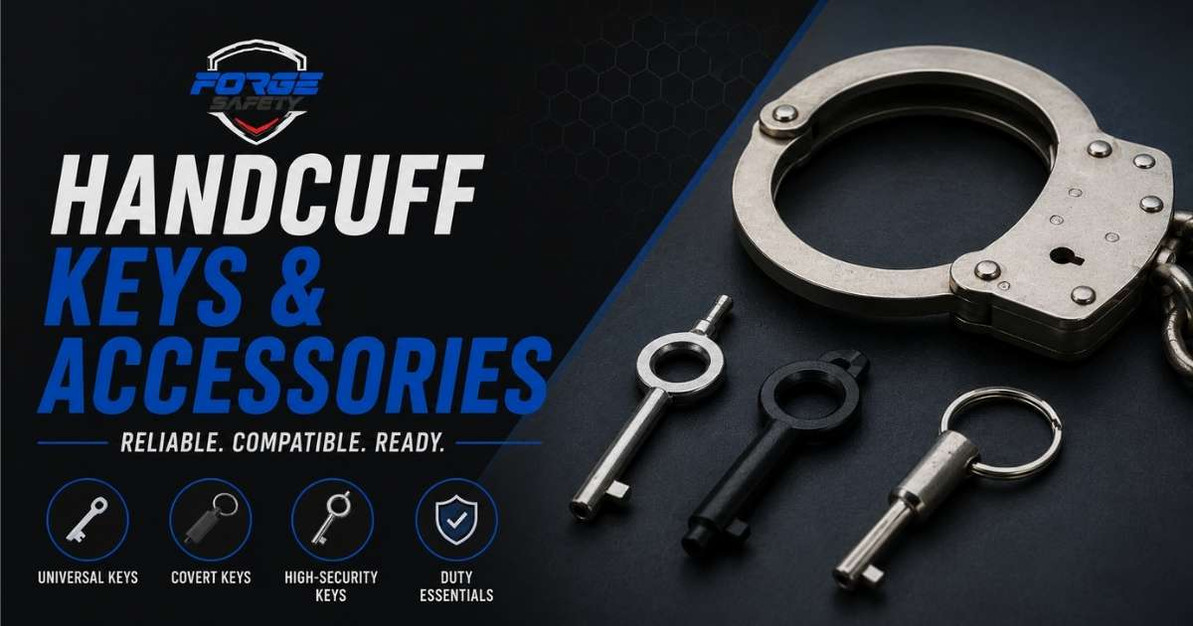
Handcuff Keys & Accessories: Types, Compatibility, and Duty Essentials
If you work in law enforcement, security, or even find yourself in a situation where understanding restraints matters, the handcuff key duty tool you carry could be the difference between control and chaos. Despite appearing simple, handcuff keys come in various designs, each engineered for specific handcuff models, security levels, and operational needs.
This guide breaks down everything you need to know about handcuff keys and accessories—from the universal standard key to specialized options like the Guardian G1 and UZI PR24 key. Whether you're an officer stocking your gear or someone preparing an emergency kit, understanding compatibility and duty essentials ensures you're never caught off guard.
Understanding Handcuff Key Types
1. Standard Universal Handcuff Key
The most common type you'll encounter is the standard universal handcuff key. Its design is straightforward: a barrel-shaped body with a single tooth at one end and often a small pin at the other.
- Tooth end: Inserts into the keyhole to disengage the ratchet mechanism
- Pin end: Engages the double-lock feature on many modern cuffs
- Compatibility: Works with nearly all standard modern handcuffs
This universal design exists intentionally—it allows seamless transport of detainees between jurisdictions and facilities without needing multiple keys.
2. Covert Handcuff Key
For officers who need a discreet option, the covert handcuff key functions identically to the standard key but is designed for everyday carry concealment.
Key features:
- Made from nylon or reinforced plastic
- Lightweight and passes through metal detectors
- Often lacks the double-lock pin, though double-locked cuffs can still be opened by turning the key in reverse first
This makes it ideal for undercover operations or emergency backup when visibility matters.
3. High-Security Handcuff Key
High-security handcuffs are engineered for aggressive or high-risk detainees. Unlike standard cuffs, they cannot be opened with a universal key.
Characteristics:
- Keyed individually (each pair has a unique key)
- Pick-resistant with restricted key control
- May include waist chains for added restraint
- Keys feature two small teeth or a single hooked tooth design
Agencies using high-security cuffs must maintain strict key inventory control.
4. Oversize Handcuff Key
The oversize handcuff key is an extra-large version designed for faster double-locking and unlocking, especially with gloves on.
Benefits:
- Extra-long aluminum barrel for lighter weight
- Knurled grip for easy handling
- Heat-treated alloy steel tip and double-lock pin
- Available with pocket clip or standard keyring
This is a favorite among officers who prioritize speed and efficiency during high-pressure situations.
Compatibility: What Works with What?
Universal Compatibility
The purposeful design of the universal handcuff key means most handcuffs open with the same basic shape. This includes:
- Peerless standard handcuffs
- Smith & Wesson classic models
- ASP handcuffs
- Most budget-friendly restraint systems
Exceptions to Watch
Not all cuffs work with universal keys:
|
Handcuff Type |
Universal Key Works? |
Notes |
|
Standard modern cuffs |
✅ Yes |
Nearly universal compatibility |
|
High-security cuffs |
❌ No |
Individually keyed |
|
Thumb cuffs |
⚠️ Sometimes |
Many require personalized keys |
|
Guardian G1 |
⚠️ Check model |
May require specific key type |
|
UZI PR24-style |
✅ Yes |
Works with most professional cuffs |
Even within brands, compatibility can vary from model to model, so testing your key with your actual cuffs before duty is critical.
Specialized Keys: Guardian G1 and UZI PR24
Guardian G1 Handcuff Key
The Guardian G1 represents modern restraint technology with enhanced security features. While specific key requirements vary by manufacturer, Guardian-series cuffs often require keys that accommodate their advanced locking mechanisms.
Key considerations:
- May not work with older universal keys
- Often used in facilities requiring higher security
- Check manufacturer specifications for exact key compatibility
UZI PR24-Style Handcuff Key
The UZI PR24 key is a versatile option favored by many professionals. It works with most professional handcuffs and commonly includes both small and large keychain options.
Features:
- Black finish for durability and low visibility
- Compatible with standard locking mechanisms
- Includes dual keychain sizes for flexibility
- Affordable and widely available
For an officer handcuff key selection, the UZI PR24 offers excellent value and reliability across multiple cuff brands.
Duty Essentials: Storage and Backup Keys
Why Backup Keys Matter
Losing your only handcuff key during an arrest or detainment situation creates an immediate operational crisis. That's why every officer should carry multiple backup keys as part of their handcuff key duty protocol.
Recommended backup strategy:
- Primary key: On your duty belt or in an accessible pocket
- Secondary key: In a separate location such as a vehicle or gear bag
- Covert backup: Nylon covert key in a wallet or hidden compartment
Storage Best Practices
Proper storage extends key life and ensures readiness:
- Keep keys dry to prevent corrosion
- Use a keychain with other essential tools
- Avoid prolonged exposure to extreme heat
- Inspect keys regularly for wear or damage
Organizing Your Accessory Kit
A complete handcuff accessory kit should include:
- Primary universal key
- Oversize key for gloved use
- Covert backup key
- Handcuff shim for emergency situations
- Keychain organizer
- High-security key if your agency uses restricted cuffs
Maintaining Your Handcuff Keys
Daily Checks
Before every shift, verify:
- The key tooth isn't bent or worn
- The double-lock pin moves freely
- The key rotates smoothly in your handcuffs
- There is no rust or corrosion
Replacement Indicators
Replace your key immediately if:
- It slips while turning the lock
- The tooth appears deformed
- The pin breaks off or becomes loose
- Double-lock engagement becomes difficult
A worn key can fail at the worst possible moment, turning a routine arrest into a dangerous situation.
Legal and Safety Considerations
Owning a handcuff key is not illegal for most civilians, but carrying one with unlawful intent can lead to criminal charges. For officers and security professionals, keys are issued equipment and must be accounted for at all times.
Safety reminders:
- Never leave keys accessible to detainees
- Double-lock cuffs after application to prevent tampering
- Use keys only on restraints you are authorized to operate
- Report lost keys immediately through proper channels
Conclusion
Understanding handcuff keys goes beyond knowing which way to turn them. The right handcuff key duty setup includes a reliable universal key, a covert backup, and knowledge of your restraints’ compatibility—especially when working with specialized models like the Guardian G1 or UZI PR24 systems.
Key takeaways:
- Universal keys work on most standard cuffs, but high-security models require specialized keys
- The UZI PR24 key offers strong compatibility with professional restraint systems
- Backup keys are essential for law enforcement and security professionals
- Proper storage and maintenance ensure reliable performance when it matters most
Take Action
Don’t wait until you’re in the field to discover compatibility issues or missing backup tools. Test your handcuff keys regularly, maintain spare options, and ensure your officer handcuff key setup meets operational requirements. Reliable gear and preparation can make all the difference during high-pressure situations.
FAQs About Handcuff Keys & Accessories
Q. Are all handcuff keys universal?
Most standard modern handcuff keys are designed to work with common law enforcement handcuffs. However, high-security or specialized restraints may require unique keys that are not compatible with universal handcuff keys.
Q. What is the purpose of the double-lock feature on handcuffs?
The double-lock feature prevents the handcuffs from tightening further once applied. This improves detainee safety and reduces the risk of injury during transport or restraint.
Q. What is a covert handcuff key?
A covert handcuff key is a compact and discreet key designed for concealed carry. These keys are commonly used as backup tools by law enforcement officers, security personnel, and undercover professionals.
Q. Why should officers carry backup handcuff keys?
Backup handcuff keys help prevent operational issues if the primary key is lost, damaged, or inaccessible. Many professionals carry multiple keys in separate locations for added security and preparedness.
Q. Does the UZI PR24 handcuff key work with standard handcuffs?
Yes, the UZI PR24-style handcuff key is generally compatible with many standard professional handcuffs and is widely used for its reliability and practical design.
Q. How should handcuff keys be maintained?
Handcuff keys should be kept clean, dry, and inspected regularly for signs of wear or damage. Proper maintenance helps ensure the key functions correctly during critical situations.
Recent Posts
-

Backpack: The Ultimate Gear for Performance, Protection, and Everyday Convenience
Introduction Whether you're heading to work, the gym, traveling, or tackling an outdoor adventure, a …Jun 30th 2026 -
Understanding Optics Adapter Plates: Compatibility, Precision Manufacturing, and Reliable Performance
As red dot optics continue to grow in popularity among professional users, competitive shooters, law …Jun 30th 2026 -

Footwear: Choosing Durable, Comfortable, and Performance-Driven Boots for Every Mission
Introduction The right Footwear is one of the most important investments you can make, whether you'r …Jun 30th 2026