
Body Armor Levels Explained: NIJ Ratings, Plates, Carriers, and Riot Gear
Body armor can seem confusing at first, especially when you start seeing terms like NIJ ratings, soft armor, hard plates, plate carriers, and riot gear all in the same conversation. This guide breaks it down in plain language so first-time buyers can understand what each piece does, how the body armor NIJ levels work, and when it makes sense to upgrade.
What NIJ ratings mean
The National Institute of Justice, or NIJ, is the main U.S. standard-setting body for ballistic-resistant body armor. NIJ ratings tell you what kind of threat a vest or plate is designed to stop, based on standardized testing against specific rounds and velocities.
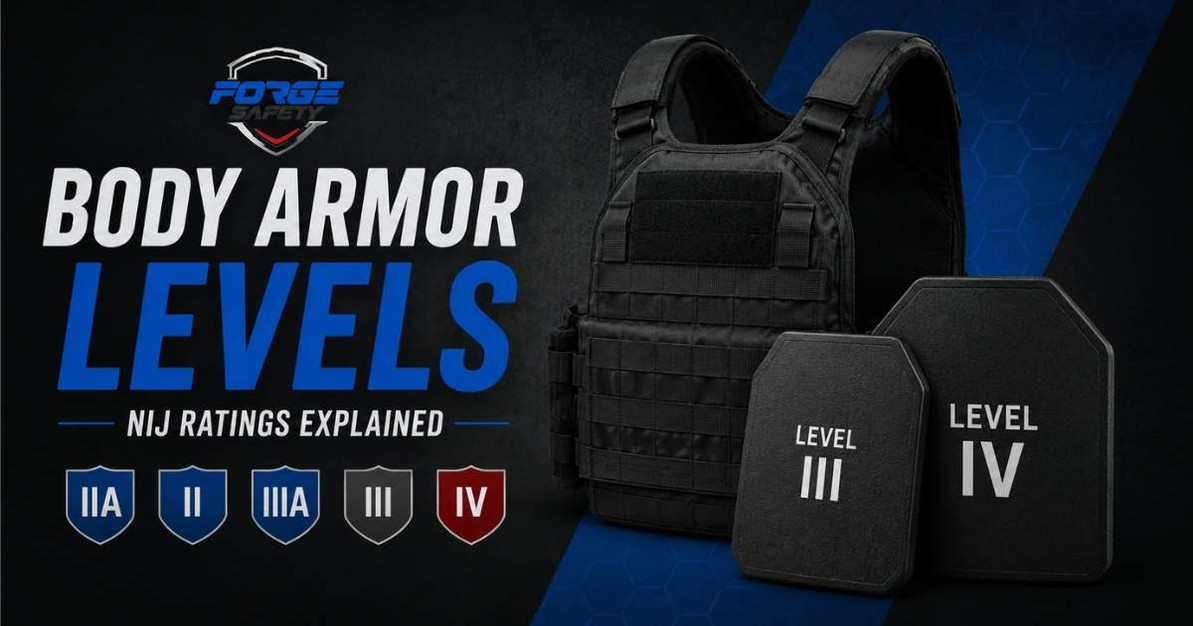
Under the older and still widely referenced 0101.06 system, the common levels are IIA, II, IIIA, III, and IV. In simple terms, IIA through IIIA are handgun-focused, while III and IV are rifle-rated and generally require hard armor plates. NIJ also updated its framework more recently to use categories like HG1, HG2, RF1, RF2, and RF3, but many buyers and sellers still use the traditional numbered levels because they are familiar.
Soft armor vs hard plates
The easiest way to understand soft vs hard plates is to think of soft armor as flexible protection for handgun threats and hard plates as rigid protection for rifle threats. Soft armor is typically worn in concealable vests and is designed to be comfortable, light, and discreet.
Hard armor plates are inserted into a plate carrier and are meant for much higher threats, especially rifles. Level III plates are commonly built from ceramic, steel, or composite materials, while Level IV plates are made for the highest common rifle threats and can stop armor-piercing rounds under the NIJ standard. For a first-time buyer, the main decision is usually whether your risk profile calls for handgun protection, rifle protection, or both.
NIJ levels at a glance
Here is the practical version of the classic NIJ levels:
- Level IIA: Light handgun protection, often the thinnest and most concealable.
- Level II: Better handgun protection than IIA, still relatively light and flexible.
- Level IIIA: The most common soft armor level, designed for strong handgun threats.
- Level III: Rifle-rated hard armor, usually used in plates.
- Level IV: The highest common level, designed for armor-piercing rifle threats.
For many civilian buyers, IIIA is the highest soft-armor level they will encounter, while III and IV are the typical hard-plate categories. A useful rule of thumb is simple: if it is soft and flexible, it is usually handgun armor; if it is rigid and plate-shaped, it is usually rifle armor.
Plates and plate carriers
Armor plates do not work by themselves. They need a plate carrier, which is the vest-like carrier that holds the front and back plates securely over vital organs. The carrier does not provide the ballistic protection on its own; the inserted plates do.
Most plate carriers are built for standard 10 x 12 inch plates, which is a common size for civilian buyers. Better carriers also help with fit, mobility, and comfort, which matters because the best armor is the armor you can actually wear consistently. A poorly fitted carrier can shift around, reduce coverage, and become tiring quickly.
Choosing between soft and hard armor
The right choice depends on the likely threat. If your main concern is concealed handgun protection, soft armor at II or IIIA is usually the better fit because it is lighter, thinner, and easier to wear for long periods. If you need protection from rifle fire, you need hard plates in a carrier, usually at Level III or IV.
Here is the simplest buying logic:
- Handgun threat, low-profile use: soft armor.
- Mixed threat, need rifle protection: plate carrier plus hard plates.
- Highest threat level: Level IV plates or newer RF-rated equivalents.
For first-time buyers, the jump from soft armor to plates is the biggest shift in both protection and bulk. Hard plates offer stronger defense, but they also add weight, reduce concealability, and can be more expensive.
What riot gear is for
Riot gear is different from ballistic armor, even though they are sometimes used together. A riot suit is mainly designed for crowd-control situations and focuses on protection from blunt force trauma, thrown objects, and impact injuries rather than bullets. Riot gear often includes a helmet, face shield, padding, shin guards, gloves, and sometimes a chest and back protector.
That distinction matters because riot gear is not a substitute for ballistic protection. A riot vest may protect against punches, rocks, or batons, but that does not mean it is rated to stop handgun or rifle rounds. In many real-world situations, law enforcement personnel may layer riot protection with ballistic protection depending on the mission.
Materials and tradeoffs
Armor plates come in different materials, and each has tradeoffs. Ceramic plates are popular because they can stop rifle rounds effectively while staying relatively manageable in weight, though they can be more fragile if dropped. Steel plates are durable and often lower cost, but they are generally heavier and can have other performance concerns depending on design and certification.
Polyethylene and composite plates are also common in modern setups, especially where weight savings matter. For many buyers, the decision comes down to balancing weight, price, threat level, and how long the armor will be worn at one time.
When to upgrade
You should think about upgrading when your risk changes, not just when you want more armor. If your current setup is soft armor and your environment now includes rifle threats, that is a clear reason to move to plates and a proper carrier. If you already own plates but your carrier fits poorly or limits movement, upgrading the carrier can improve comfort and function without changing ballistic protection.
A practical upgrade path looks like this:
- Start with the threat you actually face, not the highest rating you can afford.
- Choose soft armor for concealed handgun protection.
- Choose plates when rifle protection matters.
- Add riot gear only if your work involves impact and crowd-control hazards.
Another reason to upgrade is compatibility with modern standards. Many newer products reference the updated NIJ system, so checking whether a product is listed under the older level labels or the newer HG/RF categories can help avoid confusion.
Buying mistakes to avoid
First-time buyers often make the same mistakes. One is assuming that a higher number is always better, without considering comfort, mobility, and actual threat type. Another is buying plates without a good carrier, or a carrier without understanding plate size and cut.
It is also easy to confuse riot gear with ballistic armor, or to assume that any “bulletproof” product is automatically NIJ-rated. Always check what the armor is tested to stop, because “bullet-resistant” marketing language is not the same as a verified NIJ standard. The safest approach is to match the armor level to the threat, then choose the lightest, best-fitting setup that still meets your needs.
Final thoughts
Body armor gets much easier to understand once you separate the system into parts: NIJ rating, armor type, plate carrier, and mission-specific gear. Soft armor is the right starting point for handgun threats, hard plates are for rifle protection, and riot gear is built for impacts and crowd-control hazards rather than bullets.
If you are comparing body armor NIJ levels for the first time, focus on use case first and rating second. That approach will help you avoid overbuying, underbuying, or choosing the wrong setup entirely.
FAQ
Q. What are NIJ body armor levels?
NIJ levels are standard ratings that show what kind of ballistic threat body armor is designed to stop. Lower levels are generally for handgun protection, while higher levels are for rifle threats.
Q. What is the difference between soft armor and hard plates?
Soft armor is flexible, lighter, and usually designed for handgun protection. Hard plates are rigid and made to stop rifle rounds, which is why they are used in plate carriers.
Q. Do I need a plate carrier for body armor?
You need a plate carrier if you are using hard armor plates. The carrier holds the plates in place and helps position them over vital areas.
Q. Is riot gear bulletproof?
No, riot gear is mainly made to protect against impacts, thrown objects, and blunt force trauma. It is not a substitute for ballistic-rated body armor.
Q. Which body armor level is best for beginners?
For many first-time buyers, Level IIIA soft armor is a common starting point for handgun protection. If rifle threats are a concern, then Level III or Level IV plates are more appropriate.
Q. What does Level IV body armor stop?
Level IV armor is designed for the highest common rifle threats under the NIJ standard. It is usually chosen for situations where maximum ballistic protection is needed.
Q. Are heavier plates always better?
Not necessarily. Heavier plates may offer strong protection, but they can also reduce mobility and comfort. The best choice depends on your threat level, fit, and how long you need to wear the armor.
Q. When should I upgrade from soft armor to plates?
Upgrade when your threat environment includes rifle risks or when soft armor no longer matches your protection needs. If you only need concealment and handgun protection, soft armor may still be enough.
Recent Posts
-

Backpack: The Ultimate Gear for Performance, Protection, and Everyday Convenience
Introduction Whether you're heading to work, the gym, traveling, or tackling an outdoor adventure, a …Jun 30th 2026 -
Understanding Optics Adapter Plates: Compatibility, Precision Manufacturing, and Reliable Performance
As red dot optics continue to grow in popularity among professional users, competitive shooters, law …Jun 30th 2026 -

Footwear: Choosing Durable, Comfortable, and Performance-Driven Boots for Every Mission
Introduction The right Footwear is one of the most important investments you can make, whether you'r …Jun 30th 2026