
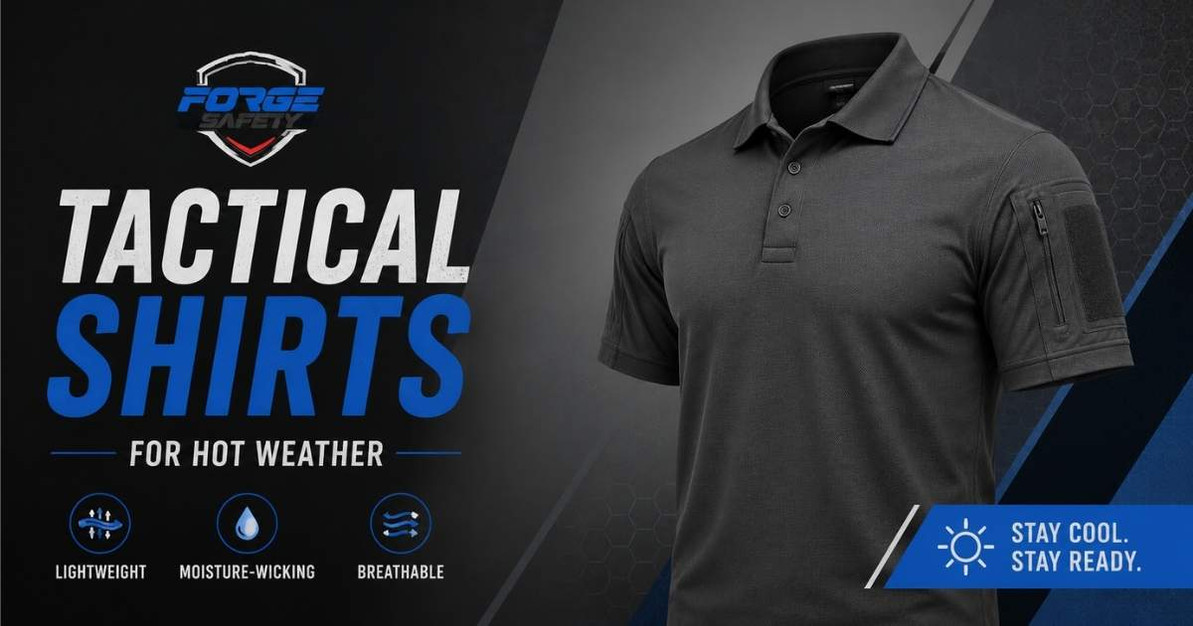
Best Tactical Shirts for Hot Weather: Moisture-Wicking, UV, and Concealment
For professionals operating outdoors, the best tactical shirts for hot weather are the ones that keep sweat moving, block sun exposure, and still help you stay discreet. The right shirt should manage heat without looking overly technical, because comfort, durability, and a professional appearance all matter in the field.
Why hot-weather tactical shirts matter
Hot weather changes how clothing performs. In humidity, sweat stays on the skin longer, which makes cling, discomfort, and fatigue worse; lightweight fabrics that sit slightly off the body and move moisture away are more comfortable. Good tactical shirts also need quick-dry behavior, ventilation, and enough structure to handle daily wear, gear contact, and long shifts.
For outdoor professionals, that combination is more than convenient. It can affect concentration, mobility, and how well you maintain a clean, mission-ready appearance throughout the day. If you work in sun, heat, or high-exertion environments, a shirt that only “looks tactical” is not enough.
What to look for
When comparing tactical shirts for hot weather, focus on these features:
- Moisture-wicking fabric that pulls sweat away from the body and dries quickly.
- UV protection or UPF-rated construction for long exposure outdoors.
- Ventilation, such as mesh panels, vented yokes, or underarm airflow zones.
- Low-profile concealment features like hidden pockets, cable routing, or a professional silhouette.
- Lightweight stretch fabric that moves with you and does not trap heat.
Fit matters just as much as fabric. Shirts that cling to the body trap sweat and reduce airflow, while a slightly relaxed cut improves comfort in humid conditions. Dark colors absorb more heat, so lighter tones are usually the better field choice when concealment rules allow it.
Vertx Pro Phantom Flex
The Vertx Pro Phantom Flex is a strong choice when you need a shirt that looks clean in public but still performs like fieldwear. It is a lightweight, stretch poly/cotton mini-ripstop shirt built for comfort and durability, which makes it appealing for long wear in active environments.
Its biggest advantage is balance. It is not a pure combat shirt, but it gives you a professional look with tactical utility, which is valuable for plainclothes work, security, inspections, or other outdoor roles where visibility matters. A vented back yoke with mesh facing helps keep the wearer cooler and drier, and faux buttons help maintain a discreet appearance.
For concealment, the Phantom Flex is useful because it avoids the overt “operator” look. That makes it a good fit for professionals who want gear that blends into normal settings while still offering movement, durability, and heat relief.
CX360 for concealment
The Elbeco CX360 is more of a performance uniform shirt than a classic tactical top, but it earns a place in this discussion because it is built for demanding public-facing work. It uses a 4-way stretch polyester fabric that is lightweight, wrinkle-resistant, and non-absorbent, which helps it stay presentable in heat. It also includes underarm mesh vents for added ventilation and range of motion.
What makes the CX360 stand out is concealment support. It includes dual communication wire access openings in the side seams to keep wires from being visible, which is especially useful for security, patrol, and plainclothes professionals who need a neat appearance. The shirt also has fluid-repellent technology that causes liquids to bead up and roll off, which helps it stay dry-looking during long shifts.
If your priority is blending tactical function with a polished public image, the CX360 is a smart option. It is less about rugged field styling and more about controlled, professional concealment.
Baselayer tops
Baselayer tops are often the best choice when heat and sweat are the real problem. They are designed to sit close to the body, wick moisture, and improve comfort under outer layers or body armor, especially in very hot environments. Hot-weather combat shirt materials often emphasize lightweight, fast-drying construction and moisture management for arid conditions.
A good baselayer works best when paired with a breathable outer shirt or uniform top. That combination helps create the airflow and moisture transfer that hot-weather clothing needs. Baselayers are also useful if your job requires armor, radio gear, or outer carriers, since they reduce friction and help manage sweat buildup under equipment.
The tradeoff is that baselayers alone usually offer less concealment and less public-facing polish than structured shirts like the Phantom Flex or CX360. They are best when performance comes first and visual discretion is secondary.
Best use cases
Each shirt type fits a different kind of outdoor professional:
- Vertx Pro Phantom Flex: Best for plainclothes work, security, and field staff who need a polished but tactical look.
- CX360: Best for professionals who need a clean, uniformed appearance with hidden utility features.
- Baselayer tops: Best for hot environments, heavy exertion, or wear under armor and outer layers.
If you work in direct sun for long periods, a shirt with both moisture control and UV protection is the safer choice. If your role requires more discretion, concealed cable access and subdued styling become just as important as cooling.
Heat management tips
Even the best shirt will underperform if you ignore the rest of your heat strategy. Keep these basics in mind:
- Choose light, breathable fabrics that allow air movement and dry fast.
- Wear shirts that fit with slight room rather than tightly clinging to the skin.
- Use vents, mesh inserts, or unbuttoned airflow zones when conditions allow.
- Prefer lighter colors when concealment requirements do not call for darker tones.
- Stay hydrated and rotate wet garments before sweat saturation turns into discomfort.
A simple example: if you are working vehicle checkpoints in summer, a Phantom Flex-style shirt may give you the right balance of concealment and professionalism, while a baselayer becomes the better option under armor during longer, more strenuous shifts.
Buying advice
The best tactical shirts hot weather shoppers should think in terms of mission, not fashion. If you need to look like a professional first and a tactical operator second, the Vertx Pro Phantom Flex is a compelling middle ground. If your job requires a clean uniform with low-visibility communication options, the CX360 is especially strong. If your biggest issue is heat load under gear, a baselayer with fast-drying, moisture-wicking construction is the most practical starting point.
In other words, the best shirt is the one that matches your environment, your concealment needs, and how much movement or gear carry your day demands.
Conclusion
Hot-weather tactical shirts work best when they combine moisture-wicking fabric, UV-conscious design, ventilation, and a fit that promotes airflow. For professionals operating outdoors, the Vertx Pro Phantom Flex, CX360, and quality baselayers each solve a different part of that problem. Choose the shirt that fits your level of concealment, your climate, and how much movement or gear carry your day demands.
FAQ
- What makes a tactical shirt good for hot weather?
A good hot-weather tactical shirt uses moisture-wicking fabric, breathable construction, and quick-drying materials. It should also allow airflow and stay comfortable during long periods of movement or sun exposure. - Are UV-protective tactical shirts worth it?
Yes, especially for professionals who work outdoors for hours at a time. UV protection adds another layer of defense against sun exposure, which is important when you are in direct sunlight for much of the day. - Is the Vertx Pro Phantom Flex good for concealment?
Yes. It offers a clean, low-profile look that works well in public-facing or plainclothes settings. It balances tactical function with a discreet appearance. - How does the CX360 help with concealment?
The CX360 includes hidden communication wire access and a polished uniform style, which helps reduce visual clutter. That makes it useful for security, patrol, and other professional roles where appearance matters. - Are baselayer tops enough on their own in hot weather?
Usually, baselayers work best as part of a layered system. They are excellent for moisture control and comfort under gear, but they may not offer the same concealment or professional appearance as an outer tactical shirt. - What colors are best for hot-weather tactical shirts?
Lighter colors usually perform better in the heat because they absorb less sunlight. However, the best color still depends on your concealment needs and workplace requirements.
Recent Posts
-
Backpack: The Ultimate Gear for Performance, Protection, and Everyday Convenience
Introduction Whether you're heading to work, the gym, traveling, or tackling an outdoor adventure, a …Jun 30th 2026 -
Understanding Optics Adapter Plates: Compatibility, Precision Manufacturing, and Reliable Performance
As red dot optics continue to grow in popularity among professional users, competitive shooters, law …Jun 30th 2026 -
Footwear: Choosing Durable, Comfortable, and Performance-Driven Boots for Every Mission
Introduction The right Footwear is one of the most important investments you can make, whether you'r …Jun 30th 2026